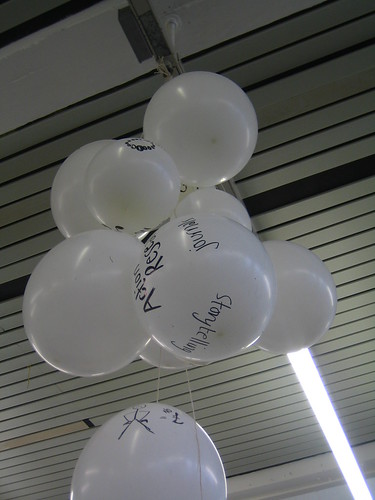
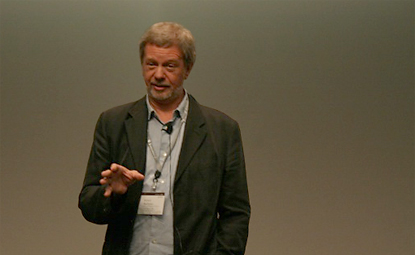
 < image from Jeff Howard's Design for Service >
Richard Buchanan's closing keynote speech on the Emergence 2007, very insightful.
Just couple of notes and quotes I put down here while listening... would like to hear what you think :)
Buchanan point out Four Boundaries of Service Design as:
1. information visulisation - build conversations following the visual presentation among community that lead to actions;
2. artefact and service - shift the foucs towards the context and consequences of using artefacts;
3. the different between a system designer and a service designer - system design? organisation design? service design? environmental design?
4. service design and management - is good service design good management?
so this is the bit that makes me interested... Buchanan askes what's things that designers do that managers don't do? He talks about the the lost wholeness of organisation operation in management studies... so are we designers getting it back to the service development? Also designer use visualisation to stimulate meaningful communication. Embodyment of the intagibles, designers re-connect the managers to the day-to-day human interactions on the working grounds.
Buchanan then moved on to ask the big question: what is the definition of Service Design? and then he claims that he was not troubled by it, so the anxiety to define it lost its point. He suggests us to be careful about feeling the need to categorising design, but spend time to find out the core quality of design, not the metaphores. As designer, we talk about techniques, talk about methods, what we don't talk about is the strategies that sets above the techniques and the methods. Methods always contains a conceptual framework, often come from another context. Well, the strategy is the art of using methods - how we involve methods and people in our practice.
Value is central in service design, according to Buchanan. One of the central features is about making people more active in their communities, to become agents of change, to be given the power to act. Designer needs to be very self-critical on how much power we retain. It is about justice.
"We can only act well if we have the right information and know how to use it wisely."
"Service design is adding another bit of understanding to this evolving practice of design thinking."
A ture design thinker.
Just couple of notes and quotes I put down here while listening... would like to hear what you think :)
Buchanan point out Four Boundaries of Service Design as:
1. information visulisation - build conversations following the visual presentation among community that lead to actions;
2. artefact and service - shift the foucs towards the context and consequences of using artefacts;
3. the different between a system designer and a service designer - system design? organisation design? service design? environmental design?
4. service design and management - is good service design good management?
so this is the bit that makes me interested... Buchanan askes what's things that designers do that managers don't do? He talks about the the lost wholeness of organisation operation in management studies... so are we designers getting it back to the service development? Also designer use visualisation to stimulate meaningful communication. Embodyment of the intagibles, designers re-connect the managers to the day-to-day human interactions on the working grounds.
Buchanan then moved on to ask the big question: what is the definition of Service Design? and then he claims that he was not troubled by it, so the anxiety to define it lost its point. He suggests us to be careful about feeling the need to categorising design, but spend time to find out the core quality of design, not the metaphores. As designer, we talk about techniques, talk about methods, what we don't talk about is the strategies that sets above the techniques and the methods. Methods always contains a conceptual framework, often come from another context. Well, the strategy is the art of using methods - how we involve methods and people in our practice.
Value is central in service design, according to Buchanan. One of the central features is about making people more active in their communities, to become agents of change, to be given the power to act. Designer needs to be very self-critical on how much power we retain. It is about justice.
"We can only act well if we have the right information and know how to use it wisely."
"Service design is adding another bit of understanding to this evolving practice of design thinking."
A ture design thinker.