I was invited to write something about my research for the Design Studies blog at the University of Dundee. So I decide to share some of my favourite visual research techniques with the smart kids at Dundee. This leads to a guest blog post 'Giving Research a Design Twist'.
Tuesday, 17 August 2010
favourite visual research techniques
I was invited to write something about my research for the Design Studies blog at the University of Dundee. So I decide to share some of my favourite visual research techniques with the smart kids at Dundee. This leads to a guest blog post 'Giving Research a Design Twist'.
Friday, 11 June 2010
Hello again
It was not my intension to leave this space empty for such a long time, yet, my thinking has not stopped during the absence of blogging. In stead, I have reached some really interesting findings of my research, and glad that the challenging job of writing and reflecting the three-year journey has gained some positive feedbacks.
Yesterday I went to London and visited Participle’s little but busy office at Tanner Street. Participle has a clear vision that challenges the current state of public service and policy making. One of their most famous projects might be the Southward Circle, a social enterprise aims at solving problems for the aging society using the power of local community. I was delightfully surprised when I heard that they actually live prototype services in their little office – turn their office into the headcounter of a social enterprise for a good couple of weeks to find out what’s working and what’s not. It is exciting just to imaging live prototyping a service rather than writing it up in a report or business plan (not saying writing is not important but you know what I mean) This reminds me of We Are Curious’s method of establishing office at their client’s site in order to develop and exhibit their learning with the key stakeholders. Locations for Service Design seems to be a rather interesting topic to have a look at, it does reflects the inspiration of building a community of knowledge around a functioning service system, isn’t it? Maybe someone should collect examples like these and make it a method… how about call it ‘real space for service prototyping’?
Jennie Winhall, the friendly senior consultant at Participle, asked me what do people do with their big thick thesis. I said, well, disseminate it. So here comes the question of how. Getting back to blogging. After the long break it is good to be back and start again with a fresh mind, with a new background (Who wouldn’t love a blue sky?) Also I am preparing some paper for different purpose right now, one about the different aspects of design outcome for Service Design, another one for design education, and potentially another one for designer’s role in change management. But maybe the best way of realizing the value of the big thick book of knowledge is through practice. Here we go, a Service Design PhD looking for a job to make a difference. So if you happen to know of any opportunity to offer, I would love to hear from you.
Sunday, 22 November 2009
two questions to Service Designers...
1. How far should service designer go in service implementation?
For my research, I interviewed a couple of service designers. It seems that not all designers actually are actually designing the touch points or carry out training workshops. Many service designers work only in the research stage of a service development project and then hand it over to other people - either the client or the so-called ‘traditional’ designers - to deliver the implementation stages.
I had an interesting conversation with one of my participants who was a practicing service design about this. It seemed that the designer was fairly happy to stay as a mainly researcher role rather than getting into the details of designing the actual touch-points or running trainings for the client. Of course I am not saying it represents what all service designers are thinking, but it did make me think how far would and should service designer, as a professional, go in service implementation?
Hypothetically, there is a role of actual producing in service development, either producing the actual touch-points (physical products or it is a piece of software) or producing the process of implementation details (the criteria of the service or a roadmap of how change would be carried out in the organisation). But in the case studies out there, I did not see a whole lot of stories about how the implementation is carried out. So why? Well, it can be that service designers do not consider the producing as Service Design job, even though they sometimes does it, they would rather let ‘traditional’ designers to do it. Or… they cannot do it, because they do not have the skill to produce. Let’s be honest, roadmap of organisational change is not really in designer’s skill set, isn’t it? Of course there is a third option that the client does not want designer to be involved in the implementation – if so, how do we overcome it?
So, my question is… if you happen to practice as a service designer, how far do you normally go in service implementation? Or, how far you think service designers should go?
2. How is Service Design related to knowledge creation and diffusion?
One thing I often hear service design say about their project is to ‘change people’s perception of service’. Service, like branding, is socially constructed in people’s mind.
Developing a new service obviously involves creating new recognitions of that service among different stakeholders, and new knowledge about how to delivery, market, operate it. And that knowledge has no value unless it is diffused to all parts involved in day-to-day service delivery. After all, designers are not the ones who handle the users or supply materials/information in the backstage. Then the ultimate goal of designing service is actually about creating and diffusing the knowledge about a new service. Visual methods, blueprints, workshops, whatever service designers use, they are just means to let the knowledge flow.
So… it seems that Service Design is actually closely related to managing knowledge creation and diffusion. But so far, Knowledge Management does not seem to be a popular topic in Service Design... I found Debowski’s Knowledge Management theory interesting. It suggests that building capacity in knowledge development can be influenced by social capacity (e.g. organisational culture), technological skills (like IT systems), leadership (vision, and strategic stuff) and project/problem-based learning (that involves designer and all stakeholders I suppose).
Have any of you guys used any similar structure to analyse or plan your Service Design projects? Say, like evaluate or predict the social capacity of the service provider while putting together the blueprint?
Or… maybe you guys have some practical tactics to go about understand knowledge creation and diffusion in Service Design process. Care to share the trick please?
Wednesday, 26 August 2009
PhD summer school
I was in the PhD Summer School last week for four days, had a nice eye-opening on the PhD projects going on in Dundee and also couple of from elsewhere in Britain. The first day we were asked to bring in a poster, thus, there is my homework:
On the second day we watched a video explainning the process of viva, and it was really great to see how the process is likely to be and what are the tips we can take. I am only writing up, but it's always good to know the next step.
I also did a 10 min presentation on the project, and got a lot of feedbacks - especially useful comments from Seaton. He also commented on the idea of 'unity of the diversity' - exactlly what I was look for in the case studies, that holding idea that makes Service Design Service Design, it can be a ideology or just a believe... mmnnn... Eva who did her PhD on craft and visualisation was saying 'to craftman the craft practice is a lifestyle', so what is Service Design to service designers?
We had two finishing PhD coming in talking about thesis writing and viva experience as well. Some good tips here:
* add a biographical note - it's nice to let the readers 'know' you as a human and understand how many decisions in the research process are influenced by where you come from;
* have a thesis outline as part of the introduction - I have done that, and my supervisors and I are using it as a graph tool to communicate the achieves of my writing, it works really well!
* bring evidence to viva - one of the outstanding characteristics of Art and Design research lies in the visual thinking process, therefore, it is reasonable to show that process as supporting material in the viva. I guess all my big big A1 sheets and wallpapers are getting into the room with me!
* prepare some tea or coffee, make sure the viva environment is as comfortable for conversation as possible. Sometimes viva can go over 2 hours, so having some water by hand is always handy (for you and the for your examiners...) also it is ture that the purpose of viva is to give the candidate the chance to indicate their ability of taking part in academic debate and defencing their arguement, so it is more like a discussion you can pick up in the conference rather than a question-answer type of interview.
Well... the future seems bright so far... Aiming at first draft before November, so... go go go~ this week I hope to hit at 20,000 words!
Thursday, 11 June 2009
process, people and knowledge
Although away from the internet, but I was working as hard as always~ Firstly, big big ‘thank you’ to all the inspiring conversations I had with the brilliant designers from Livework, Engine, Plot in London, We Are Curious in Glasgow and Professor Alan McKinley in St Andrews!
This morning I was editing the article for Re-public's special issue on Service Design, which hopefully is going to be published soon online!
As usually… the discussion/conclusion paragraphs got me dead… and as usually I start to doodle on post-it notes
Process can be a chain of stages where people feed their relationships and knowledge into.
Process can be carried out in such ways that it actively form itself to fit into people’s relationship and capture their knowledge.
Maybe there should be a third one:
Process can be guiding people through to build new relationships and create new knowledge.
Thursday, 9 April 2009
a mind explosion on Service Design
This is a quick thoughts dumping before I go off to holiday and forget everything I have in my mind now... it's a bit long and chaotic... but... enjoy!
I had a great time in London - lots of interesting conversations with lots of inspiring minds! About half way through my PhD we had a break through point to narrow down the research focus to the stakeholder management in SD process. (I always like to use 'we', as many decisions are made through discussions with my dear supervisors, don’t think that I can take all the credits here! ) Often ideas and thoughts got shaped during the conversation with inspiring minds from all sorts of backgrounds, I guess my PhD is really a collective work in a way. Therefore, I would love to share some reflections I collected along the two weeks via different means. To be honest, there is no statement or conclusion here, everything is pretty random and always open to discussion.
The management/transformation of knowledge gets a lot of attention recently. Hugo Raaijmakers started a heated conversations on the LinkedIn discussion board on SD methodology and there are also some very interesting thing going about the challenge to define SD in relations to the existing design disciplines or even at a broader sense, the existing knowledge, in the PhD Design mailing list. Today I got an email from a PhD peers, Fabian Segelström urging us SD PhDers to share some thoughts on this matter. (Thanks Fabian, I seem to need couple of these kicks to get me to writ my thoughts down!) Fabian pointed out that the matter of articulating the implicit knowledge barriered in SD practice needs to be explicited and linked back to existing concepts and literatures. I am with Fabian here. How do we know we are not reinventing the wheel? How do we know that we are actually making a difference and even improvement by introducing methods and methodologies to service organizations and public audience?
It is really important that we as researchers hold the critical point while exam the practice and learn from it at the same time. But it is turethat the knowledge base of SD is really unclear and I do have a feeling that a lot of established literatures in management, consulting and policy development are overlooked (agree with Nick @LinkedIn discussion). Maybe it is time to go back and try to make some sense of SD in a larger sense outside the design domain. If we are talking about SD as a main response to the notion of inter-disciplinary work, then understand where SD fit with other disciplines is crucial to any research or practice. Do we know who are the giants whose shoulders we are standing on? Do we have a clear idea of the knowledge structure of SD so far?
Some very interesting insights came from Engine while I talked to Nick, Erick and Jo earlier about how Engine (could) manage the knowledge internally. I was really amazed by the dynamic interactions and the knowledge transformation going on in that small group. It was a pity that this is not the focus of my current research, but there is potentially a very innovative business model for SD there with all the practice they have explored by themselves initially. While Re from Radastation also told me a lot about the networking nature of how he works with other SDers and various clients. Maybe there are couple of future research topics on business model innovation for design consulting there!
Last week I had a very interesting conversation with Lucy Kimbell (she organised the D4S research project in Oxford, possibly the first SD research in the UK). One of the very interesting came off during the conversation was that, there might be no SD in 5 or 10years... it becomes a concept rather than a discipline. But it can be a positive thing that SD becomes part of something that is more powerful but may not under the name of design anymore, or it can be picked up by other more established discipline as a means to move forward. Well, if you think this one is too critical, read the next one...
Maybe doing research on SD is not about service at all. I don't know if it is because of the nature of my own research or is there any other researchers in the field share a similar feeling as mine. We study a lot about design itself, its tools, its process, the experiential bit about design, and knowledge management in consulting environment, how many of us really talk about service? The service provides a context for design. Is it possible that we might have been rushed a bit trying to establish generable process, methodologies or even theories while forget the fact that concepts and tools have to work and should be studies in its context? So how much do we actually understand our context?
Well, finally, finally… guess I might raise some arguments here, but told you, I am really thinking and talking on the fly… have to admit there are a lot of self-criticize here as well... would love to hear what you say :)
Monday, 30 March 2009
Has Design Thinking got a problem?
'So-called “design thinking” is the new It-Girl of management theory. It purports to provide new ways for managers and companies to provide innovative, creative solutions to old problems. But design thinking alone will not solve these problems because a lack of creativity was never the issue.
The real issue is one of power.[...] '
I am not going to say that I totally agree with Sam, but I like the way she talked about power, as it seems to be something designer try to avoid talking about. Designers love creating, some of them love thinking as well. The power of creating is so familiar to designers, that they don't see it anymore. I came across service designers talking about change people's mind or people's perception of problem solving and being creative, surprisingly, few of them mention power. Designer holds the power - the power to change people's mind simply by amazing them with the process of creating, by getting them involved in the journey of discovering the stories of a product or a service, by sharing tool to create the life they wanted. It may not be hug step forward but at least they nudge - small change make big differences. But somehow the recognition of such power was often underestimated by designer themselves, a strategic approach to claim that power, therefore, gets neglected along the way.
Monday, 16 March 2009
NESTA - THE LAB
"The Lab provides the freedom, flexible capital and expertise to undertake radical experiments. It tests out new ways of finding and spreading the best ideas - this might be by running a challenge prize, building a social ventures incubator, or creating powerful new teams of users, front-line staff and decision-makers."
THE LAB has three main part:
- challenge lab: explores how innovation can help services respond to critical social and economic issues, starting with ageing, climate change and health;
- methods lab:puts radical thinking into action and is where we test and assess the best ways of fostering public service innovation;
- and learning lab: helps you to apply and spread what we learn.
Wednesday, 4 March 2009
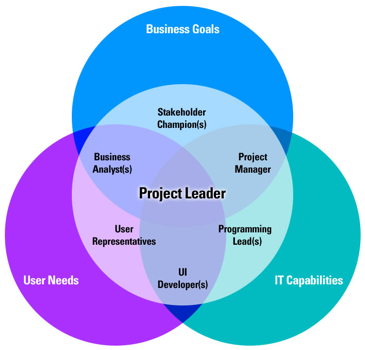
a holistic view for (service) design team
What in fact bugs me a bit is the right corner circle, and I wonder if that is more of the role that service designer will play as facilitator/navigator rather than as a technology expert. But then I add on 'tool' here... in many cases service designers act as the observer or the researcher using enthnographic tools, but they also act as visual tool creator as well, eh, well that kind of fit back into the facilitator's role, isn't it? I am a bit confused here, and wonder if any of you guys has an oppinon on it?
Wednesday, 18 February 2009
Richard Buchanan on the 'Four Boundaries of Service Design'
Just couple of notes and quotes I put down here while listening... would like to hear what you think :)
Buchanan point out Four Boundaries of Service Design as:
1. information visulisation - build conversations following the visual presentation among community that lead to actions;
2. artefact and service - shift the foucs towards the context and consequences of using artefacts;
3. the different between a system designer and a service designer - system design? organisation design? service design? environmental design?
4. service design and management - is good service design good management?
so this is the bit that makes me interested... Buchanan askes what's things that designers do that managers don't do? He talks about the the lost wholeness of organisation operation in management studies... so are we designers getting it back to the service development? Also designer use visualisation to stimulate meaningful communication. Embodyment of the intagibles, designers re-connect the managers to the day-to-day human interactions on the working grounds.
Buchanan then moved on to ask the big question: what is the definition of Service Design? and then he claims that he was not troubled by it, so the anxiety to define it lost its point. He suggests us to be careful about feeling the need to categorising design, but spend time to find out the core quality of design, not the metaphores. As designer, we talk about techniques, talk about methods, what we don't talk about is the strategies that sets above the techniques and the methods. Methods always contains a conceptual framework, often come from another context. Well, the strategy is the art of using methods - how we involve methods and people in our practice.
Value is central in service design, according to Buchanan. One of the central features is about making people more active in their communities, to become agents of change, to be given the power to act. Designer needs to be very self-critical on how much power we retain. It is about justice.
"We can only act well if we have the right information and know how to use it wisely."
"Service design is adding another bit of understanding to this evolving practice of design thinking."
A ture design thinker.
Wednesday, 11 February 2009
small things make big changes
Interestingly, in another meeting last week, a very talented MDes student Lauren Currie, or kown as Redjotter in cyberspace, talked about her experience in working on a emploibility work she did in Amsterdam with DesignThinkers. She said it is often small changes you need to make to get the system work. For exampel employing a female driver for the shuffle bus, so that women can go to work without religious concerns from their husbands. Small change, big differences.
So is it possible that in Service Design, there are two processes going on in every project simultaneously? You have a tecnical top-down process with structures such as 'blue-print' and a bottom-up process with conversations among all the individuals who are involved in the design process, directly or indirectly. Wonder if anyone has any similar thoughts? it would be interesting to hear what kind of reflections you guys get from practice :-)
and...oh yes, I am still halfway through the Tipping Point , far behind all my hard-working students here ;-)
Wednesday, 4 February 2009
relationship mapping
Find this facinating tool on Engine's website about how they find out the people and their relationships in a service system.
"Services are created and consumed through systems of relationships between people, things and processes. In order to innovate within these systems, it is important to understand the network of relationships between the people and organisations that make a service work - or that fail to make a service work. "It seems to be really powerful tool when it comes to identify 'silent designer' in the system or 'key people' who has power over the service situations. Wonder if the designers from Engine Group are able to have face-to-face encounter with these 'key people' in their map in the practice? Ha-ha, one more questions for my interview list :)
Tuesday, 3 February 2009
Monday, 2 February 2009
Brand Driven Innovation & Service Design
Thanks to Ralf. I find this very interesting blog of Erik Rocam, Brand Driven Innovation and Erik has a post about some first insights of Service Design, comparing to 'traditional design' and multidisciplinary design management (that's a new word to me!) He offers some very interesting observations/interpretations as a outsider, especially as a brand specialist:
"It is clear that what connects the touch points in this model is the evolving relationship between organisation and end user. This relationship, on a fundamental level, is the brand. The specific consumer journey represents the execution of the brand for that specific product/service/consumer. This puts the brand in a place where it connects the touch points, and forms the white space between the words, whether it concerns a product or a service experience."
I always find it facinating how different people can relate Service Design to what they have been doing for a long time. This diversity, which is brought into Service Design by people from different backgrounds, has already stimulated dicussions and cooperations for new types of design practices to be carried out at new level with large or small organisations in this constantly changing world we are all living.
It is exciting, isn't it?
Thursday, 15 January 2009
Three questions to the Service Design world
Question 1: How do we change our understanding of the design process in Service Innovation?
Traditionally, design processes were modelled on practices that create tangible objects such as a building, a product or an advert. Different theoretical models highlight slight variations in the stages, but the final outcome is always a synthesised plan that goes straight into production. The uniqueness of service design is that the design outcome is a living system that evolves over time as a result of rich human involvement. The distributed pattern of Service Innovation suggests that the result of the design process is open to future changes. The design outcome is not a solution to a certain problem, but a starting point for stimulating more innovations in the service system. This ties service design process closely towards concepts such as Open Innovation and knowledge diffusion science (see E. Rogers).
Question 2: What are the designer’s new roles while working with multiple stakeholders?
For service designers, working with multiple stakeholders acting as silent designers brings difficulties and opportunities to the development of new types of design practice. The service design practitioners in the field nowadays are mostly from a production design, interactive media design or a marketing related background. Therefore, for them to work in a service organisation, service designers are often facing questions such as: where are the hidden silent designers in a service system? What kind of specialized knowledge do they have that can be beneficial to designers? What kind of tools and methods can design provide to unlock stakeholders’ creativity? How do designers work beyond boundaries for collaboration?
Current service design practitioners use visuals and prototypes to interpret different stakeholders’ languages into a vision that everyone can use to relate themselves to the design process. However, they should be aware that a service system will have to be able to self-recover and self-improve after the designers step away. Therefore, service designers, rather than simply the creators of a system, have multiple roles. They are the explorers in discovering customer experiences and also the communicators of its complexity. They are the negotiators of value and the mediators that bring different stakeholders together. Most importantly, as members of a profession with a long history of employing creative methods, service designers become the ideal people to unlock the power for innovation within the organisation at all levels. Working with multiple stakeholders, they have the responsibility to turn the silent designers into active designers. This role of facilitator in organisation environments requires not only visual communication skills but also some basic understanding of ‘empowerment’ – a concept often found in power discourse, social psychology and even philosophy (see M. Foucault, Mary Parker Follett ).
Question 3: How would design’s value be recognised and accepted by other disciplines in Service Knowledge?
With a general recognition of the economic and social value of service, many other disciplines are also conducting new research and concepts in service related issues. At the same time, the awareness of building a multi-disciplinary service community has increased within service science, management and engineering (SSME). At the 2007 AMA Frontiers in Service Research conference, Epworth et al. used the metaphor of a ‘big tent’ that brings service science, management, engineering and art together with a central ‘tent pole’ of the service customer (see Fisk and Grove, in press).
Service designers, with special values to bring to this process of knowledge sharing, should be encouraged to get involved in multi-disciplinary research and practices. At the same time, design education should take the responsibility of introducing service knowledge to a future generation of designers. ‘T-Shaped’ design graduates with skills in design expertise and with a business vision in mind will be capable to work collaboratively with other people in multi-disciplinary teams to share the value of creativity.
Thursday, 8 January 2009
BBC use the power of Open Innovation
the briefs online covers different apects of BBC as a media group, I checked out the Scotland part in particular and find the team's discussions have a really interesting diversity.
I am always facinated by any practice in Open Innovation, where innovation is no longer the privileges of couple of specialists in the R&D team in labs that fulled with tubes and expensive machines. Designers used to be - well often still are - one of these specialists, especially if you are from a industrial design background. As a profession that deal with creative tools and process at daily basis, designers now have new roles to play and new value to provide. For example, in many Open Innovation cases, designer's abilities to facilitate the ideas stimulation and to synthesis the outputs of innovation process can provid more value than simply being the creator of these ideas. On the other hand, it does become a challenge to ask designer to 'hand over' (or possibly share is a better word here) the right to be the creative one(s). I still remember coming across this saying of 'designers are designing themselve out of job by passing their skills to others' in the conversation with Lauren the other day, and we both think that the changing role of designer should be understood as an opportunity for designers to move up the value creation chain rather than a dangrous terrior we try to hide from. It creates more jobs at strategic level for our future designers.
The innovation is changing, in service or product, in private or public sector, with the emerging of new apporaches to innovate such as Open Innovation. It is not only the design practitioners who are developing, the people they design for/with is developing as well. Developing the ability of giving away 'the right to design' (at the right time) might be the next challenge to both pioneering practitioners and design students.
by the way... here arecouple of other groups that champion Open Innovation... might be helpful if you are interested:
IBM - an innovator with a dramatic history, also a big supportor behind the Service Science concept... after turning itself from a PC manufacturer to an IT solution consultancy in the early 90's, IBM is still cited as a classic example of business transform towards the New Economy. I guess it definitely has something to do with the non-stop exploratory of new ways of innovations in not only their business offering but also business strategies.
Microsoft - Microsoft's attempt to arranged a design contest for building the next generation PC...
Lego - Lego join the community of Open Innovation by launching the Lego Factory, a site that combines mass-customisation and open innovation together to allow kids design their own Lego toys.
Nike - NikeID started the trend of have customised fashion and sports products ordered online. Like Lego, a move that reflects the development of mass-customisation technologies.
NineSigma - the biggest Open Innovation community online...
InnoCentive - another open innovation community that takes research and development problems in a broad range of domains such as engineering, computer science, math, chemistry, life sciences, physical sciences and business, frames them as "challenge problems", and opens them up for anyone to solve them.
News!!!
Just discovered an interesting Book Project using an Open Innovation approach to get people involved in the creation of a business model innovation book by Alex Osterwalder and Yves Pigneur ... check it out to see if you'd like to contribute :)
Wednesday, 10 December 2008
management innovation
“why can’t we bring as much innovation, adaptation, and engagement to our organizations as we do to our development of products and technologies?” Gary Hamel asks, in his The Future of Management. When it comes to innovate in a process that is not centered in a R&D group, the power of innovation gets lost in the day-to-day 9-5 operation. Same challenge to service companies, how to keep the creative spirt in the organisation during the continous growth of service systems? The answer is to do it with its people. By people I mean everyone involved, not only the top managers or service managers. The power of innovation, the people-centered approach, the design toolkits, should be deliveried to the contact employees, the customers, the accountants, the external enterprises, the logistics, the part-times, the full-times, the I-have-no-time-being-creatives! Engaging people in the design process is just one part of the job of a service design manager, there is a even more challenging part: to keep that engagement in the organisation and let it grow with the service system.
Tuesday, 9 December 2008
where is design?
Wish me good luck with the writing... 10 days 10 pages :o)
Wednesday, 3 December 2008
Confession
In The Evolution and Future of Service, Fisk and Grove argue that the science of studying service systems starts in the study of Service Marketing. The marketing managers are the first ones devoted to improving the situation of angry and unsatisfied service consumers in service operations. The study of customer needs and the implementation of all kinds of marketing tool that influence customer behaviours in the service system, slowly extended into the involvement of other subjects such as service engineering, information system, human resource management, financial analysis, policy science, even social science. Gradually, the publications on the topic of Service Marketing seem to have a say on everything in the service system, from employee enrolment, business strategy, to branch office interior environment. In his book on customer relationship, Gronroos proposes this idea of everyone in the organisation taking the responsibility of a ‘part time marketer’. Interestingly, Gronroos’ idea looks very similar to the concept of ‘silent designer’ – a popular concept used to describe the managers who takes the design jobs in organisations.
I wonder if in the real world the marketing employees, even marketing managers, have such a big impact on the service system development. It seems that the role of putting together a cross-departmental cooperation is still often left to the CEOs. A vision that requires everyone in the service system to share cannot be achieved just as simple as coming up with the brightest idea around any single stakeholder, such as customer. I am confused, yet, I love the word ‘nudge’ used by Lisa, a bright colleague of mine, when it comes to describe the designer’s impact in multi-discipline project on not-so-design topics.
Ok, here is the question I really want to ask, what do service designers do to maximise the impacts that they expect on the service system, after they become the ones who know everything about the customer?
Monday, 20 October 2008
Questions & Hypotheses