Thank you for all these years' commenting and supporting, I would love to see you at the new place :)
Showing posts with label service design. Show all posts
Showing posts with label service design. Show all posts
Monday, 20 September 2010
moving home
I have moved my blog to a new host for www.designgeneralist.com, so I will stop updating this place.
Thesis published - practices and principles in Service Design

After three years of hard work and countless editing, finally, my PhD thesis is published in the form of a book via lulu.com publication.
"How do service designers manage multiple stakeholder involvement in complex projects? How do they generate knowledge and disseminate it? What is a Community of Service, and why is it important to the future of service design practice? In this book, based on her PhD thesis, Qin Han examines the practice and theory of service design, identifying three common design approaches to stakeholder management, and the knowledge that service designers need to develop projects and groups. This ground breaking study of the relatively new discipline of service design offers a useful summary of existing literature from related fields and places it in a design context. Dr Han concludes with important proposals for the future study, practice and teaching of Service Design. A must-read for practitioners, academics and students of design, business and management."
You can order the book directly here for £24.65
Free summary for downloadAlso for those who don’t have the time to read through the whole book, I provide a summary for download here <- it doesn’t cost you anything but a tweet, so please enjoy the work and spread the words.
Sunday, 15 August 2010
The service design of proposing a marriage

A girl friend of mine told me that a boy asked her for advise on what kind of engagement ring he should get to propose to the girl he loves. And my friend says, ‘it is not about the ring, you boys just don’t get it, it is about the presenting of it.’
Guessing what a girl wants has always been a bit of a mystery to most of the boys. It takes more than a good guess. I suppose many service designer/manager may share similar experiences, you can get statistics about trend, taste and fashion of any ‘thing’, but the difficult part is to deliver the right ‘thing’ to the right person at the right time with the right feeling. What you need is to get advice and inputs from other people. In this case, parents, her sister and girl friends are all V.I.P stakeholders. In some scenarios, blessing or permission from parents are important to this marriage you are proposing. And girl friends will be able to provide useful suggestions from a girl’s perspective, and even probe information for you. Consulting married couples may provide good case studies as well.
And when it comes the big moment, emotions are even more important than the rock (I know the rock costs a lot, but hey…) A sense of commitment is essential, and most of the girls would love to be surprised (just a little bit). After all, it is often the emotion that gets the girl, not the ring. Or shall I say, it is the ‘service’, not the ‘product’ that gets you the big ‘yes’.
Monday, 18 January 2010
customer experience touch-point cards

Now let's see what Simon says about these really inspiring cards...
1. Where does the idea of producing touch point cards come from? Who made them? Is there any project context that gave birth to them?
The idea emerged when we started running workshops in the AT-ONE project two years ago. AT-ONE is a project that aims to assist the first stage of an innovation project - the Fuzzy Front End - using service design techniques. In AT-ONE, each of the letters relate to different aspects of service innovation - Actors, Touch-points, Offering, Need, Experience - and we have developed innovation workshops for each letter. As part of the Touch-Point workshops, we found ourselves needing touch-point examples to help with both mapping and analysis work (before a workshop) and for idea generation during the workshops themselves. We started out with lists, then photos and decided that what we needed was a set of cards that could both stimulate new thinking, but also help map out existing situations. When we realised that the conference was coming up, we decided to print up a set for the participants.
The cards were made by Ingvild Støvring and me together, both of us from AHO (the Oslo School of Architecture and Design). She took most of the photos and designed the cards, I created the content list and the tools for their use. We printed at a local printers after trying (and failing) to find a cheap foreign printer.
2. How would you describe the process of developing these cards developed? Were they prototyped or tested?
The development process has been kind of evolutionary over the past two years. We have run tons of Touch-Point workshops together with various companies, and various versions of support examples were developed to help communication and innovation. We have moved from texts to images to the combination shown on the cards. We have also developed several tools to help design teams facilitate new thinking about touch-points, and some of them are included with the cards. So, they have been prototyped several times and improved each time, most recently during our master course in Service Design last Autumn. It seems like the forced association method is the one that the students always like to use. I guess its because it encourages radical ideas and forces you to think in new directions.
3. Who are these card made for? I noticed there are five different ways you suggestedto play these cards, so I guess the card game is designed not only for design teams, would you describe a bit more about the possible situations that thesecards can be used?
The cards are made for cross-functional teams who are at the start phase of an innovation process. When teams come together, there is often an interesting but odd mix of people and varying degrees of design experience. One of the main things that happens in the start phase is team building - finding common ground and pulling together. At the same time, the strategic mandate the project has received is translated into a chosen direction for the project. Its a critical time for the project, since decisions made here have huge consequences for future direction. Hopefully the cards will help the team (or individual members) analyse the present situation (if there is one) and develop ideas for new services or service touch-points. We have tried to design them so that they can be usable by any team member or team facilitator. So far, they seem to work well, and I find myself using them regularly in different contexts.
The contexts for their use are as follows, but we have found that they can be used in other contexts as well.
Firstly, they are aimed to be used at the early stages of the innovation process, the fuzzy front end. This is a divergent stage in a project in which various directions are being explored, and many opportunities are still open. The cards aim to help analysis, reflection and idea generation during workshops in which multiple stakeholders are involved. Generally a design team includes stakeholders from across organisational silos and include a broad set of disciplines. The cards should hopefully assist communication accross these different boundaries, and help create a common understanding regarding various touch-point issues. They also make explicit, what earlier has been up inside peoples heads. This is a common comment about design and its role in process facilitation - the use of images creating a common understanding within a team - and its true. We have found that using the cards helps move the team forwards in a good way.
Use context 1: Mapping an existing situation.
The cards help map out an existing situation. For example, the team can go through each stage of a service (or customer) journey and pick out the touch-points that are relevant at each stage. From this, many aspects can be discussed, such as which touch-point is most important to the customer, which are (maybe) used in sequence, which are most frequently used etc. This helps get the discussion moving around how customers view the service through touch-points, and how they often jump between them. It can also help raise the discussion about who is reponsible for develping and maintaining each touch-point. It is always a surprise for a team to understand that there is often a total lack of touch-point coordination accross an organisation.
Use context 2: Identifying pain points
Once the service journey has been mapped out, then there are loads of things you can do. One of the things we find useful is to identify the touch points along the service journey that dont perform particularly well, and why. This can be a useful means for improving consistency of experience along the service journey.
Use context 3: Whose touch-point is it anyway
One of the things we have found out is that in large organisations, different departments can be responsible for different touch-points. This often comes as a shock to an organisation, but is something that is usually noticeable from the customer perspective. There can be different tones of voice, interaction styles, use of images, typography and especially different terminology. Identifying who is responsible for each touch-point and finding ways of coordinating between them can be very useful. So, what we do is simply to note who is responsible for each touch-point used to access the service.
Use context 4: Touch-point migration
An organisation might get lazy, or might just not have routines in place for updating their touch-points. Over time, a touch-point might become out of date or there could be a better touch-point alternative that can be migrated towards. This is particularly relevant when it comes to use of technology and discussions regarding self service. Going through the touch-point cards can give ideas for new touchpoints and can help map out a migration strategy from one touch-point to another.
Use context 5: Touch-point addition or subtraction
This one is aimed at challenging todays situation by removing important touch-points. Based upon the touch-point mapping, remove the main touch point at each stage of the service journey, and discuss how it can be replaced. Surprisingly, you will find that it can be replaced, and this can give you ideas regarding new facets to a service. It it cannot be replaced, then the team has gained a deeper understanding of the touch-points importance and role. The opposite of this is to pick a random card at each step of the service-journey and discuss how it could be used to improve the service. We have added some specific touch-points for this, such as "service integrated into a product" or "smart phone". This can be a useful task in many ways, particularly to help challenge todays situation, which might have deep historical roots and need updating. Thinking about how an iPhone app could improve the service is never a bad thing anyway.
Actually, a bit of a sidetrack here, but when we started the project we had one card for mobile phone. However, we realised quite quickly that technological development has moved so fast that there are mobile phones, internet enabled phones and smart phones running apps. We had to create several categories of phones, and will probably have to add even more over time, such as tablets perhaps.
Use context 6: Forced association to create new services
This one is a favourite in workshops, even though it doesn't always generate that many relevant ideas. In this task you are forced to create a service based upon random cards: pick two (or more) random cards from the pack and design a service for your client based only upon these two cards. Forced association is a well known technique to force you away from logical thinking, and doing this with the touch-point cards is a good way to force yourself to think differently. Quite often you will end up with useless combinations, but its easy to put the cards back and pick again. Its a fun and challenging way to look at touch-points, and often unearths useful reflections regarding a service.
As you can see, the cards help stimulate both understanding and various kinds of innovations. They can be used for anything from analytical approaches to idea generation to impulsive and radical new solutions, depending upon the project and project context. They can be used alone or in teams, and work well together with clients.
4. Have these touch point cards been used in projects yet? (for example student projectin AHO?) It would be great to have some examples of these cards being used indifferent context or projects.
The cards have been used in student projects and together with several service providers. The project has a collaboration with several organisations in Norway, but two main ones - a large insurance company (Gjensidige) and the National Lottery (Norsk Tipping). We have carried out two iterations of the methods used in AT-ONE per year, so have already run through 5 iterations of the process. The experience so far is very encouraging, and we are in the process of validating the process and individual tools at the moment. This is not an easy thing to do, since innovation is not always easy to measure. Where do ideas come from, where do they go, and do how do they become adapted underway? Is organisational change a more important innovation than the number of ideas generated? Does the focus upon touch-points that this particular tool encourages (there are tens of other tools too) lead to better consistency in a service over time? What we have found is that the tools help generate a lot of ideas. They also help give new perspectives and understanding, and particularly help companies understand how customers view their company through touch-points and over time. So far, we are pretty happy with these cards, and we will definitely print up some more quite soon. In addition, we will make them available as a download on www.service-innovation.org, together with the other tools we are working upon.
If we were to remake them, I don't think I would change many things. There are some formulations that could be improved, and we have only scratched the surface when it comes to how to use them. I think its a good idea to set them free, so that people can add cards and add tasks. In that way they could continually evolve, which would be nice.
( from Simon Clatworthy, 18 Jan 2010)

Thursday, 26 November 2009
Nordic Service Design Conference 09
My horribly busy writing schedule has kept me from doing many things that I should have done for weeks, and... this is one of them... I haven't got time around to report any thoughts on the conference, well, now much of them are already lost in the mist of my memory.
Some materials from me if you are curious what happened:
But, there are three good blogposts of this conference online now from others:
1. Jeff Howard's Design for Service: some useful links of presentation and pictures from the conference, and most recently a post about the Service Design Touch-point cards.
3. This one is from a friend of mine (shared with Lauren Tan and JB!) Joyce Lee from the Northumbria University. We met at the conference and made dinner together - the good old days, now seem so far away!
Some materials from me if you are curious what happened:
[some really nice picture of service designers co-creating their own dinner at the conference!]
[here are all the conference papers, I found some really good ones, already used in my thesis as quotes!]
and finally my PPT presentation available here:
Qin, Nordic Service Design Conference
View more presentations from Qin H.
Monday, 23 November 2009
sweet sweet gifts


To be honest, I was quite impressed by the organisation of Nordic SD Conference - received this little pack shortly after arriving at the hotel. Couple cute gifts from the organisor, including a pair of over-shoes to 'protect your favourit e shoes regardless of weather conditions' (shame that my Timberland seem too big for them...) and a set of design cards around touch-points from the AT-ONE project.
It seems that card making is the new 'black' in Design now. we all know the famous IDEO cards, as far as in Service Design, I know of two other sets of cards. One is the SILK method cards made by Engine with Kent city council. The other one was Lauren (Redjotter)'s Master project: Making Service Sense, a set of postcards of SD case samples. Both brilliant projects - I would love to see more likely projects, and also see these methods find their way into organisations and make tangible differences. It would be great if the use of design card becomes as normal as using SWOT Analysis. well... if you know of any other similar card sets, I would love to hear from you!
I mean it's a good thing. It's a sign that designers are preparing to share the authority of being the 'gifted ones' with more people and moving into a facilitating role in order to encourage innovation at larger scale, well and democracy as well. I consider it as a sign of this profession becoming more and more matured, and am happy to see that Service Design is honest to what it claims to be: co-design, and empower others.
Really look forward to tomorrow, yet, have to prepare for my own speech first... left the speech notes in the UK, so gotta work from scratch again... Well, let's enjoy the next three days!
Sunday, 22 November 2009
two questions to Service Designers...
After trying gto put an conclusion down on paper for the past weeks, I still have two questions in my mind. Think it might be a good idea to share with you guys to see what you think... Let gather the brain power around the world, and see what we get!
1. How far should service designer go in service implementation?
For my research, I interviewed a couple of service designers. It seems that not all designers actually are actually designing the touch points or carry out training workshops. Many service designers work only in the research stage of a service development project and then hand it over to other people - either the client or the so-called ‘traditional’ designers - to deliver the implementation stages.
I had an interesting conversation with one of my participants who was a practicing service design about this. It seemed that the designer was fairly happy to stay as a mainly researcher role rather than getting into the details of designing the actual touch-points or running trainings for the client. Of course I am not saying it represents what all service designers are thinking, but it did make me think how far would and should service designer, as a professional, go in service implementation?
Hypothetically, there is a role of actual producing in service development, either producing the actual touch-points (physical products or it is a piece of software) or producing the process of implementation details (the criteria of the service or a roadmap of how change would be carried out in the organisation). But in the case studies out there, I did not see a whole lot of stories about how the implementation is carried out. So why? Well, it can be that service designers do not consider the producing as Service Design job, even though they sometimes does it, they would rather let ‘traditional’ designers to do it. Or… they cannot do it, because they do not have the skill to produce. Let’s be honest, roadmap of organisational change is not really in designer’s skill set, isn’t it? Of course there is a third option that the client does not want designer to be involved in the implementation – if so, how do we overcome it?
So, my question is… if you happen to practice as a service designer, how far do you normally go in service implementation? Or, how far you think service designers should go?
2. How is Service Design related to knowledge creation and diffusion?
One thing I often hear service design say about their project is to ‘change people’s perception of service’. Service, like branding, is socially constructed in people’s mind.
Developing a new service obviously involves creating new recognitions of that service among different stakeholders, and new knowledge about how to delivery, market, operate it. And that knowledge has no value unless it is diffused to all parts involved in day-to-day service delivery. After all, designers are not the ones who handle the users or supply materials/information in the backstage. Then the ultimate goal of designing service is actually about creating and diffusing the knowledge about a new service. Visual methods, blueprints, workshops, whatever service designers use, they are just means to let the knowledge flow.
So… it seems that Service Design is actually closely related to managing knowledge creation and diffusion. But so far, Knowledge Management does not seem to be a popular topic in Service Design... I found Debowski’s Knowledge Management theory interesting. It suggests that building capacity in knowledge development can be influenced by social capacity (e.g. organisational culture), technological skills (like IT systems), leadership (vision, and strategic stuff) and project/problem-based learning (that involves designer and all stakeholders I suppose).
Have any of you guys used any similar structure to analyse or plan your Service Design projects? Say, like evaluate or predict the social capacity of the service provider while putting together the blueprint?
Or… maybe you guys have some practical tactics to go about understand knowledge creation and diffusion in Service Design process. Care to share the trick please?
Wednesday, 8 July 2009
Re-public's special issue: Innovative Service Design for All
I got a paper published on Re-public's special issue of their online journal: Innovative Service Design for All. The title of my article is 'Mind the Gap: Theories and practices in managing stakeholders in the service design process'.
All the articles are very interesting, two draws my attention especially:
Nicola Morelli's 'Beyond the experience: In search of an operative paradigm for the industrialisation of services' , which talks about the industrialisation of services in the public sector. Morelli says:
Soumitri Varadarajan proposed a design for the new university design programme of Service Design in India. A nice piece to read if you have the ambition to set up Service Design programme in your own university or maybe like what we do here in Dundee - integrate the elements of Service Design into the teaching of all kinds of design courses.
All the articles are very interesting, two draws my attention especially:
Nicola Morelli's 'Beyond the experience: In search of an operative paradigm for the industrialisation of services' , which talks about the industrialisation of services in the public sector. Morelli says:
"The process of building the service starting from the customers’ experience canThis is very true in some of my case study experience, and also interestingly ties into the three themes of my findings: People, Process and Knolwedge. although mine still needs a bit thought-through ;-]
be compared with a process of reverse engineering of such experience. The
experience is de-composed in elementary modules. A set of competences, knowledge and technologies is associated to each of those modules. [...] The
disaggregation of service systems in modular structures makes it possible to
shift the production process for those services from a centralised and vertical
logic to a decentralised and horizontal one."
Soumitri Varadarajan proposed a design for the new university design programme of Service Design in India. A nice piece to read if you have the ambition to set up Service Design programme in your own university or maybe like what we do here in Dundee - integrate the elements of Service Design into the teaching of all kinds of design courses.
Friday, 3 July 2009
Service Design reading list
I was building up my Endnote database yesterday to get ready for writing up 'the big book' - yes, welcome to hell...
Not very surprisingly, my database covers a lot of management books, some design books, some experience books and couple of economic books... it makes me wonder if you are a Service Designer/student, what kind of books are you reading?
So here I would like to collect your comments on a reading list for people who are interested in Service Design and maybe want to do a bit reading for it. It would be great if you could spare 2 seconds recommend two books (or journal articles) you think every Service Designer should read - not have to be Design books, can be anything really!
Think I might kick off first here:
Bernd Schmitt, Customer Experience Management - not exactly a Service book or a Design book, but it presents a very interesting framework to build 'experience platform' which then spread the seeds of customer experience into different business functions.
Bill Hollins, Total Design. Perhaps also couple of his more recent books... to be honest, although I am not a big believer of standardisation, this little book does provid a nice flavour of the many other issues along with the design process that any development processes will have. Plus, it is a small book that doesn't look scary!
This list will go to our librarian for furture purchase and I will keep update the comments into this post here!
Alright, you turn now... Thank you in advance!
Boland, J., Collopy, F., Ed. (2005). Managing as designing. California, Stanford University Press.
This book is more general in terms of design in a business and management context but very helpful where ever design is crossing into other disciplines.

Not very surprisingly, my database covers a lot of management books, some design books, some experience books and couple of economic books... it makes me wonder if you are a Service Designer/student, what kind of books are you reading?
So here I would like to collect your comments on a reading list for people who are interested in Service Design and maybe want to do a bit reading for it. It would be great if you could spare 2 seconds recommend two books (or journal articles) you think every Service Designer should read - not have to be Design books, can be anything really!
Think I might kick off first here:
Bernd Schmitt, Customer Experience Management - not exactly a Service book or a Design book, but it presents a very interesting framework to build 'experience platform' which then spread the seeds of customer experience into different business functions.
Bill Hollins, Total Design. Perhaps also couple of his more recent books... to be honest, although I am not a big believer of standardisation, this little book does provid a nice flavour of the many other issues along with the design process that any development processes will have. Plus, it is a small book that doesn't look scary!
This list will go to our librarian for furture purchase and I will keep update the comments into this post here!
Alright, you turn now... Thank you in advance!
From Arne Van Oosterom (DesignThinkers):
Linked , Albert-László Barabási
The Selfish Gene, Richard Dawkins
From Tom Allen:
A summary of the past thirty years of service design literature. http://bit.ly/hHm0J
From Nick Marsh (Engine):
These are two pretty heavy going books that are worth getting:
http://www.choosenick.com/?action=view&url=two-non-design-service-design-books-every-service-designer-should-read
Here's more:
http://designforservice.wordpress.com/2009/02/24/books-for-service-designers/
From Deborah Szebeko (ThinkPublic):
The Tipping Point -Malcolm Galdwell
It's Not How Good You Are, Its How Good You Want to Be – Paul Arden
From Ben Reason(Livework):
http://www.howardesign.com/exp/service/
Natural Capitalism - Paul Hawkin et al
Reassembling the Social - Bruno Latour
From Todd Johnston:
The Timeless Way of Building (Alexander),
Biomimicry (Benyus),
Out of Control (Kelly)
Lauren Tan:
I would recommend the Designing for Services reader that was distributed in the early stages of the project and also the report which combines reflections on the project from the designers, academics and the project leads (Lucy Kimbell and Victor Seidel).
Designing for Services - Multidisciplinary Perspectives: Proceedings from the Exploratory Project on Designing for Services in Science and Technology-based Enterprises, Saïd Business School (2008) Edited by Lucy Kimbell and Victor P. Seidel
Boland, J., Collopy, F., Ed. (2005). Managing as designing. California, Stanford University Press.
This book is more general in terms of design in a business and management context but very helpful where ever design is crossing into other disciplines.
Richard Randolph:
• The Experience Economy: Work is Theatre & Every Business a Stage by B. Joseph Pine II and James H. Gilmore. This is the one that started it all.
• Experiential Marketing, by Bernd H. Schmitt
• The E Myth Revisited: Why Most Small Businesses Don't Work and What To Do About It by Michael E. Gerber
• Brand Sense: Build Powerful Brands through Touch, Taste, Smell, Sight, and Sound by Martin Lindstrom
Tom Kiehl:
My view is that good service design must balance customer satisifaction, profitability, and associate morale, particularly in businesses where front line associates are key to delivering service.
- Four Things a Service Business Must Get Right by Frances X. Frei, Harvard Business Review, April 2008
- Zero Defections, Quality Comes to Services by Frederick Reichheld and Earl Sasser, HBR, Sept-Oct 1990
- The Trader Joe's Adventure: Turning a Unique Approach to Business into a Retail and Cultural Phenomenon by Len Lewis
- Nuts! Southwest Airlines' Crazy Recipe for Business and Personal Success by Kevin Freiberg and Kevin Freiberg
James Samperi (Engine):
2 books which aren't focused on 'design' but any service 'designer needs to understand and know about. The latter book is comprehensive and pretty accessible - i can't vouch for the first but recommended by my colleague.
New Service Development and Innovation in the New Economy
From Products to Services: Insights and experiences from companies which have embraced the service economy.
Sarah Drummond:
simplicity- edward de bono
'In an increasingly complex world 'simplicity' is going to be a key value. The pace of change is not going to stop so we have to make a conscious effort to make things simpler.'
Marc Fonteijn(31VOLTS):
* The experience economy
* Subject to Change
* Everything is miscellaneous
* 10 faces of innovation
* The knowing-doing gap
And I second Sarah with simplicity as a must read
proto partners:
Wired to Care by Dev Patnaik and Pete Mortensen of Jump Associates,
The Loyalty Effect from Fred Reicheld
Lucy Kimbell:
Vargo, S. and R. Lusch (2004), “Evolving to a new dominant logic in Marketing,” /Journal of Marketing, /68, 1-17
Vargo, Stephen L. and Lusch Robert (2008), "Service-dominant logic: continuing the evolution," Journal of the Academy of Marketing Science, 36 (1), 1-10.
Jeff Howard:
John Thackara's book "In The Bubble: Designing in a Complex World" and a bi-monthly magazine published in Los Angeles called "Good."
http://www.good.is/
Isaac Arthur:
Adaptive Path's 'Subject to Change' is the best all around service design book I've found,
Neumeier's 'Brand Gap' and 'Zag' are indispensable books for all designers, regardless of their specific discipline'
And a great article from NextD on design 3.0 (transferable philosophies and processes to service design)
Paul Thurston(ThinkPublic):
Designing Services with Innovation Methods
Garrick Wood:
'How Designers Think: The Process Demystified' by Bryan Lawson
'What Designers Know' by Bryan Lawson
Lorne Mithell:
One of the main folk I track in this area is John Seddon (Vanguard Consulting) who is visiting Professor at Cardiff University. He has adapted the Demming/Ohno Toyota Production System philosophy to Service Design in both the Private and, more recently, Public sectors. He is an excellent speaker as well. You can get his material at Vanguard Consulting - and you can see him on video at: http://www.vimeo.com/4670102
Bhavna Bahr
In the Bubble - John Thackara
Naked Brain - Richard Restak
Buyology - Martin Lindstorm
Why We Buy - Paco Underkill
The Hidden Dimension - Edward T Hall
How Customers Think - Gerald Zaltman
Universal Principles of Design
Ten Faces of Innovation - Tom Kelly
Visual Ethnography - Sarah Pink
Jonathan Norman:
Maybe too far off for your pusposes but we are publishing: Design for Services, edited by Dr Anna Meroni and Dr. Daniela Sangiorgi in March 2010
http://www.gowerpublishing.com/isbn/9780566089206
Birgit Mager
Touchpoint . The Journal of Service Design, Köln: Köln Interntional School of Design
Miettinen, Satu / Koivisto, Mikko (Hrsg.): 28Designing Services with Innovative Methods, Keuruu: Otava Book Printing,
Wednesday, 1 July 2009
any Service Design in China?
I was looking at this world map of Service Design activities [via Jeff's blog], and was surprised that there is nothing about Service Design from mainland China...
I notice some visit of this blog from Shanghai and Beijing... so... anyone know anything like that happening in China?
I notice some visit of this blog from Shanghai and Beijing... so... anyone know anything like that happening in China?
Friday, 12 June 2009
Service Design Research

Nice that the research people are getting actions as well :)
You can find some really interesting interviews on the Service Design Research website! Hopefully there will be more good stuff like that in the future.
Thanks to Jonathan for the information.
Thursday, 9 April 2009
a mind explosion on Service Design
This is a quick thoughts dumping before I go off to holiday and forget everything I have in my mind now... it's a bit long and chaotic... but... enjoy!
I had a great time in London - lots of interesting conversations with lots of inspiring minds! About half way through my PhD we had a break through point to narrow down the research focus to the stakeholder management in SD process. (I always like to use 'we', as many decisions are made through discussions with my dear supervisors, don’t think that I can take all the credits here! ) Often ideas and thoughts got shaped during the conversation with inspiring minds from all sorts of backgrounds, I guess my PhD is really a collective work in a way. Therefore, I would love to share some reflections I collected along the two weeks via different means. To be honest, there is no statement or conclusion here, everything is pretty random and always open to discussion.
The management/transformation of knowledge gets a lot of attention recently. Hugo Raaijmakers started a heated conversations on the LinkedIn discussion board on SD methodology and there are also some very interesting thing going about the challenge to define SD in relations to the existing design disciplines or even at a broader sense, the existing knowledge, in the PhD Design mailing list. Today I got an email from a PhD peers, Fabian Segelström urging us SD PhDers to share some thoughts on this matter. (Thanks Fabian, I seem to need couple of these kicks to get me to writ my thoughts down!) Fabian pointed out that the matter of articulating the implicit knowledge barriered in SD practice needs to be explicited and linked back to existing concepts and literatures. I am with Fabian here. How do we know we are not reinventing the wheel? How do we know that we are actually making a difference and even improvement by introducing methods and methodologies to service organizations and public audience?
It is really important that we as researchers hold the critical point while exam the practice and learn from it at the same time. But it is turethat the knowledge base of SD is really unclear and I do have a feeling that a lot of established literatures in management, consulting and policy development are overlooked (agree with Nick @LinkedIn discussion). Maybe it is time to go back and try to make some sense of SD in a larger sense outside the design domain. If we are talking about SD as a main response to the notion of inter-disciplinary work, then understand where SD fit with other disciplines is crucial to any research or practice. Do we know who are the giants whose shoulders we are standing on? Do we have a clear idea of the knowledge structure of SD so far?
Some very interesting insights came from Engine while I talked to Nick, Erick and Jo earlier about how Engine (could) manage the knowledge internally. I was really amazed by the dynamic interactions and the knowledge transformation going on in that small group. It was a pity that this is not the focus of my current research, but there is potentially a very innovative business model for SD there with all the practice they have explored by themselves initially. While Re from Radastation also told me a lot about the networking nature of how he works with other SDers and various clients. Maybe there are couple of future research topics on business model innovation for design consulting there!
Last week I had a very interesting conversation with Lucy Kimbell (she organised the D4S research project in Oxford, possibly the first SD research in the UK). One of the very interesting came off during the conversation was that, there might be no SD in 5 or 10years... it becomes a concept rather than a discipline. But it can be a positive thing that SD becomes part of something that is more powerful but may not under the name of design anymore, or it can be picked up by other more established discipline as a means to move forward. Well, if you think this one is too critical, read the next one...
Maybe doing research on SD is not about service at all. I don't know if it is because of the nature of my own research or is there any other researchers in the field share a similar feeling as mine. We study a lot about design itself, its tools, its process, the experiential bit about design, and knowledge management in consulting environment, how many of us really talk about service? The service provides a context for design. Is it possible that we might have been rushed a bit trying to establish generable process, methodologies or even theories while forget the fact that concepts and tools have to work and should be studies in its context? So how much do we actually understand our context?
Well, finally, finally… guess I might raise some arguments here, but told you, I am really thinking and talking on the fly… have to admit there are a lot of self-criticize here as well... would love to hear what you say :)
Saturday, 7 March 2009

public service - universal design
If we investigate our campus like this as a student group project, the result should be interesting... new workshop coming up ;o)
[thanks to DesignThinkers for the resource]
Wednesday, 4 March 2009
a holistic view for (service) design team
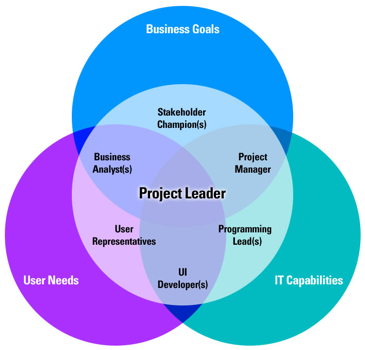 image from Boxes and Arrows
After reading Joseph Selbie's post 'Bring Holistic Awareness to Your Design' on Boxes and Arrows, I quickly made this graph here and start to wonder what is a holistic view for Serivce Design team? What's interesting is that in Joseph devide the role in the design team as Stakeholder Champion, Project Manager, Busines Analyst, User Representatives, UI Developer, Programming Lead. Although Joseph is talking about using user-central approach in web designing, I can instently see characters being reflected in many other design practice that uses a user-central approach...

What in fact bugs me a bit is the right corner circle, and I wonder if that is more of the role that service designer will play as facilitator/navigator rather than as a technology expert. But then I add on 'tool' here... in many cases service designers act as the observer or the researcher using enthnographic tools, but they also act as visual tool creator as well, eh, well that kind of fit back into the facilitator's role, isn't it? I am a bit confused here, and wonder if any of you guys has an oppinon on it?
If we step back and have a look at the 'holistic picture', we might be able to get a sense of the wholeness of all three parties. This model can be an interesting starting point to interpret the dynamic roles of people who are involved in a design project - that many of them play multiple roles at different stage or even simultaneousluy. Whomever is involved in a process at a certain stage is there for a reason, they either has certain knowledge, skill or technique to contribute, or can be benefited from the participation. Design process is often an intensive knowledge exchange, even knowledge integrating process where designer often achieve a certain level of 'inaugurative learning' (Jevnaker, 1993) with the client. So in Service Design, firstly, what is the definition of a design team? What do service designers benefit when people are involved in a project? How they make the decisions of when certain stakeholders should be getting on board, when to leave them aside? What communication techniques are used if team members come from a different background and has different purpose to join the project?
Friday, 20 February 2009
we are curious
This morning I had an interesting chat with Florence Andrews, co-founder of We Are Curious, at the Lighthouse Cafe in the gray rainy Glasgow. We Are Curious might be the only British Service Design cosultancy not located in London. (please let me know if you know of any other examples outside London!) Florence simply said, we don’t want to leave Glasgow to do service design, so we decide to start a business here. The company is established in 2005 with the support of NESTA and so far have developed a rich portfolio of design projects from education to healthcare areas.
Florence describes their work as not strictly service design, they take on many different types of work, but the key is to involve as many people as possible in the design process, especially users. In order to understand user’s needs and the social environment from which these needs emergies, often service designer need to develop a certain level of the regional knowledge that is close to the user’s day-to-day living condition. We Are Curious is very proud of the empathy towards the client organisation and the service user in their practice, especially towards the people in the Glasgow region. This makes me think of the locationlization of service systems. One of the charactieristics of service is the highly customization of cutomer offerings. That understanding of people, their love and sorrows, their dreams and fears, is perhaps the most important transferable knowledge of service designer in their various practicies.
The idea I got today is that maybe we shall encourage our young designers to try and start their service design practices wherever they are living and to seed the idea of ‘serivce thinking’ into whatever projects they are involved no matter where they will be working.
If Service Design, as Buchanan suggests, is about justice. Then justice is needed everywhere, isn’t it?.
Wednesday, 18 February 2009
Richard Buchanan on the 'Four Boundaries of Service Design'
 < image from Jeff Howard's Design for Service >
Richard Buchanan's closing keynote speech on the Emergence 2007, very insightful.
Just couple of notes and quotes I put down here while listening... would like to hear what you think :)
Buchanan point out Four Boundaries of Service Design as:
1. information visulisation - build conversations following the visual presentation among community that lead to actions;
2. artefact and service - shift the foucs towards the context and consequences of using artefacts;
3. the different between a system designer and a service designer - system design? organisation design? service design? environmental design?
4. service design and management - is good service design good management?
so this is the bit that makes me interested... Buchanan askes what's things that designers do that managers don't do? He talks about the the lost wholeness of organisation operation in management studies... so are we designers getting it back to the service development? Also designer use visualisation to stimulate meaningful communication. Embodyment of the intagibles, designers re-connect the managers to the day-to-day human interactions on the working grounds.
Buchanan then moved on to ask the big question: what is the definition of Service Design? and then he claims that he was not troubled by it, so the anxiety to define it lost its point. He suggests us to be careful about feeling the need to categorising design, but spend time to find out the core quality of design, not the metaphores. As designer, we talk about techniques, talk about methods, what we don't talk about is the strategies that sets above the techniques and the methods. Methods always contains a conceptual framework, often come from another context. Well, the strategy is the art of using methods - how we involve methods and people in our practice.
Value is central in service design, according to Buchanan. One of the central features is about making people more active in their communities, to become agents of change, to be given the power to act. Designer needs to be very self-critical on how much power we retain. It is about justice.
"We can only act well if we have the right information and know how to use it wisely."
"Service design is adding another bit of understanding to this evolving practice of design thinking."
A ture design thinker.
Wednesday, 11 February 2009
small things make big changes

Last Friday, I had an interesting discussion about the gaps between strategic planning and the implement process and organisational learning. Somehow the conversation lead to the two dimensions in system implementation: a technical dimension and a social dimension. The technical implementation is often top-down, for example a new admin policy being introduced to the organisation internally. While the social system works bottom-up in terms of organisational culture, attitude change, learning motivation among the individuals. Marty Neumeier talks about how brand only exist in the minds of people, while I believe it is a turth to many other things. So in any system that involves human interactions, including service system of course, you only get one chance to have ++ situation. And in most cases, we naturally land in +-, or even worse --. If we say the technical problem can be solved by introducing new structure, new media, new technology, new strategic statement; then, in order to solve the social problems, we may need to look upon smaller changes - the 'tipping points'.
Interestingly, in another meeting last week, a very talented MDes student Lauren Currie, or kown as Redjotter in cyberspace, talked about her experience in working on a emploibility work she did in Amsterdam with DesignThinkers. She said it is often small changes you need to make to get the system work. For exampel employing a female driver for the shuffle bus, so that women can go to work without religious concerns from their husbands. Small change, big differences.
So is it possible that in Service Design, there are two processes going on in every project simultaneously? You have a tecnical top-down process with structures such as 'blue-print' and a bottom-up process with conversations among all the individuals who are involved in the design process, directly or indirectly. Wonder if anyone has any similar thoughts? it would be interesting to hear what kind of reflections you guys get from practice :-)
and...oh yes, I am still halfway through the Tipping Point , far behind all my hard-working students here ;-)
Monday, 9 February 2009
Nordic Conference on Service Design

A new Service Design conference coming up in Oslo, called Service Desin 09, organised by Norwegian Design Council.
This conference has couple of themes around research, education and management perspectives along with the business showcase. The themes includes:
- boundaries, foundation and constituent parts of the emerging discipline of service design
- history and trajectories of service design
- critical views
- methods, tools and processes
- case studies
- relation to design thinking, design leadership and design management
- education and research perspectives
Abstract deadline is 20th April... am thinking of putting in a paper on reflection/conclusion of the empirical data on Service Design Managmemt - should be interesting!
If anyone is going or submitting paper as well, please give me a shout! Especially the lovely guys from the PhD corner in Amsterdam, we shall meet up again!!!!
Look forward to meeting you :)
Wednesday, 4 February 2009
Open Innovation as Service Design Approach
Remembering me trying to figure out what Open Innovation can do for Service Designers weeks back?
Now I find the answer from STBY ;-)
Now I find the answer from STBY ;-)
Subscribe to:
Posts (Atom)